


Ptosis Surgery in Singapore (Droopy Eyelid Surgery)

Dr Leo Kah Woon
Consultant Plastic & Reconstructive Surgeon
MBBS (Singapore), MMed (Surgery) (Singapore), MRCS (Edinburgh), FAMS (Plastic Surgery)
Ptosis itself is usually not painful, but constantly trying to keep the eyes open can be tiring. As the forehead muscles work harder to compensate, some individuals experience eye strain, tension headaches or a persistent feeling of heaviness around the eyes. Others may notice shadows creeping into their upper field of vision. A consultation with Dr Leo Kah Woon allows for a detailed assessment to determine the cause of the drooping and whether corrective treatment may help restore comfort, function and balance.
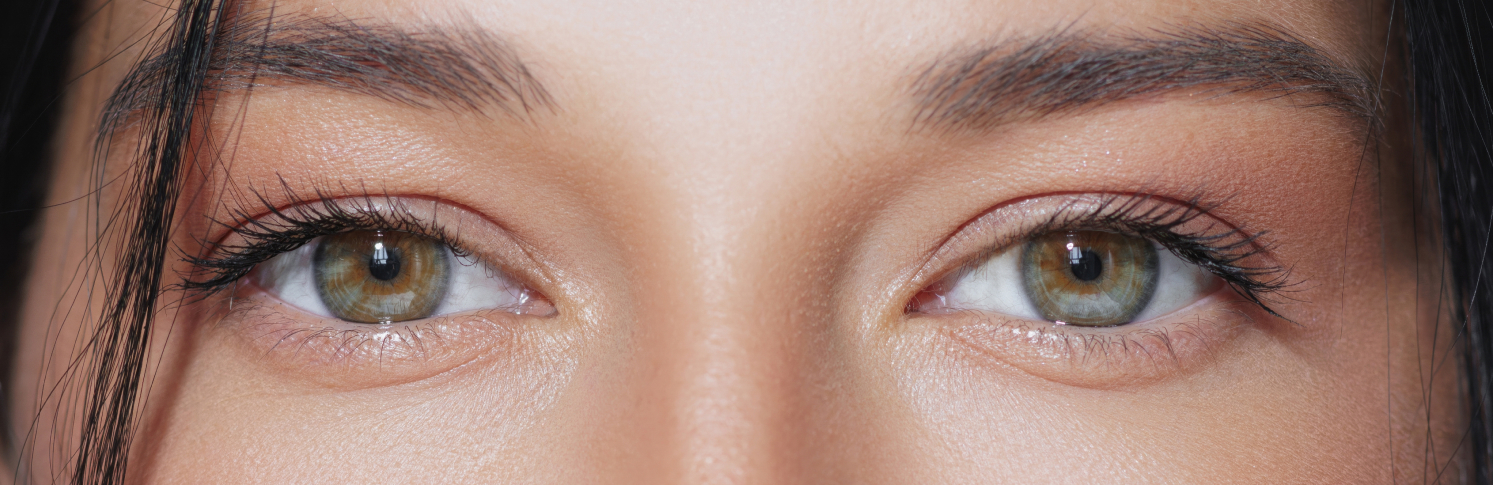
What Is Ptosis (Droopy Eyelid)?
Ptosis is a condition where the upper eyelid sits lower than normal, affecting one or both eyes. The degree of drooping can vary widely—from a subtle change in eyelid position to a more pronounced descent that partially blocks the pupil and interferes with vision.
The primary muscle responsible for lifting the eyelid is the levator muscle, assisted by Müller’s muscle. When these structures weaken, stretch or function abnormally, the eyelid may no longer open fully. While mild eyelid sagging can occur naturally with age or genetics, more significant ptosis can create both visual and functional concerns.
Patients with moderate to severe ptosis often describe a “curtain” or “shadow” over their upper vision. To compensate, they may unconsciously raise their eyebrows, leading to forehead fatigue and recurring headaches. Although ptosis is more commonly seen in older individuals due to age-related changes, it can also occur in younger patients, where it is often limited to one eye rather than both.
What Are the Causes of Ptosis?
Ptosis can be either congenital or acquired, depending on when the drooping develops.
Congenital ptosis is present at birth and most often occurs due to poor development of the levator muscle. It may be linked to genetic factors, muscle malformation or birth-related trauma, such as pressure from forceps during delivery.
Acquired ptosis develops later in life and can arise from several underlying causes:
- Ageing – Over time, the levator muscle or its tendon may stretch or weaken, leading to gradual drooping. This is the most common type in adults.
- Medical Conditions – Neurological or muscular disorders such as myasthenia gravis, Horner’s syndrome or oculomotor nerve palsy can affect eyelid muscle function.
- Eye Injury, Trauma or Surgery – Direct injury, previous eye procedures (including cataract surgery) or changes in the surrounding tissues can impair the structures that lift the eyelid.
Chronic conditions such as diabetes and hypertension may also increase the likelihood of developing ptosis by weakening the eyelid’s supporting tissues over time.
How Is Ptosis Diagnosed?
Diagnosing ptosis involves a detailed eye examination to understand its severity and identify the most appropriate treatment approach in Singapore. Common diagnostic methods include:
- Marginal Reflex Distance (MRD) Measurement – This measures how high the eyelid sits relative to the pupil, providing a clear indication of how much the lid has dropped.
- Visual Field Test – By checking whether the drooping eyelid blocks part of your vision, this test helps determine how ptosis affects daily tasks such as reading, driving or navigating steps.
- Ocular Motility Assessment – Eye muscle movement is examined to rule out nerve or muscle-related conditions. This ensures the underlying cause is correctly identified before planning treatment.
- Levator Muscle Function – The strength and movement of the levator muscle are evaluated to guide the choice of surgical technique and predict the likely improvement.
- Evaluation of Drooping Severity – Your surgeon will also assess eyelid crease height, skin laxity and any asymmetry to determine the full extent of the condition.
We provide a wide range of procedures to enhance the eyes with beautiful and natural-looking outcomes.
For a personalised consultation, please reach out to us today.
'%3e%3cpath%20d='M23.3806%2017.7994L27.0353%2014.1943C27.1565%2014.0748%2027.2252%2013.912%2027.2264%2013.7418C27.2276%2013.5716%2027.1611%2013.408%2027.0415%2013.2868L23.4365%209.63208C23.3474%209.54145%2023.2334%209.47931%2023.1089%209.45353C22.9845%209.42776%2022.8552%209.43952%2022.7375%209.48732C22.6197%209.53511%2022.5188%209.6168%2022.4475%209.72202C22.3763%209.82723%2022.3378%209.95124%2022.3371%2010.0783L22.3176%2013.0667L1.17973%2012.9212L1.17095%2014.2062L22.3088%2014.3498L22.2875%2017.3381C22.2865%2017.4652%2022.3232%2017.5897%2022.393%2017.6959C22.4628%2017.8021%2022.5626%2017.8852%2022.6797%2017.9346C22.7968%2017.984%2022.9259%2017.9975%2023.0507%2017.9734C23.1755%2017.9494%2023.2903%2017.8888%2023.3806%2017.7994Z'%20fill='%23D0A35B'/%3e%3c/g%3e%3cdefs%3e%3cclipPath%20id='clip0_6509_1595'%3e%3crect%20width='19.251'%20height='19.251'%20fill='white'%20transform='translate(27.4932%2013.7437)%20rotate(135.392)'/%3e%3c/clipPath%3e%3c/defs%3e%3c/svg%3e)
Am I a Candidate for Ptosis Correction in Singapore?
A thorough assessment will be needed to determine whether surgery is appropriate and which approach may be used. You may be a suitable candidate for ptosis surgery if:
- The drooping eyelid is affecting your field of vision
- You experience eye strain or fatigue from trying to keep your eyes open
- You wish to enhance eyelid symmetry or improve the overall appearance of your eyes
Ptosis Correction Surgery Procedure
Droopy eyelid surgery is customised according to the severity of ptosis and the function of the eyelid muscles. Two main surgical approaches are commonly used:
Anterior Approach (External)
– This technique uses an incision along the eyelid crease to adjust the levator muscle. This method is suited for moderate to severe ptosis, often combined with blepharoplasty, and is ideal for patients needing stronger lifting.Posterior Approach (Internal)
– This minimally invasive technique is done through a small incision on the inner eyelid to shorten Müller’s muscle. It results in a lifted eyelid without external scars, offering quicker recovery and preserved natural contour. It is best for mild to moderate ptosis with good underlying muscle function.
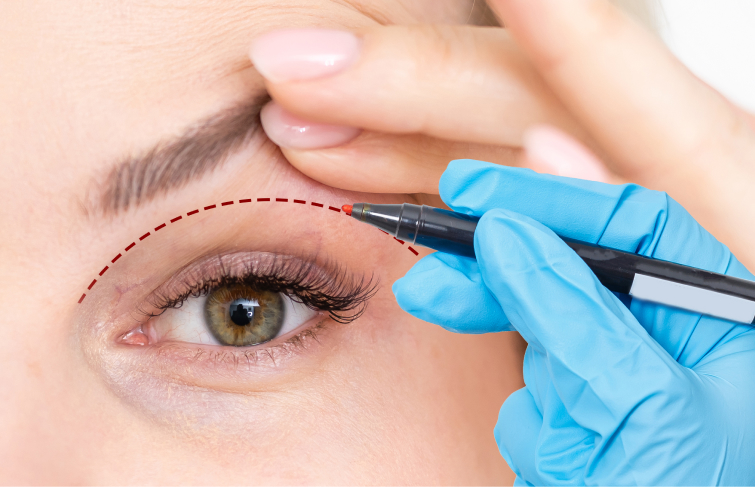
For ptosis correction, Dr Leo employs the levator advancement method, a day procedure performed under local anaesthesia. It is done by first creating an incision in the double eyelid crease. The levator aponeurosis is then identified, shortened and re-anchored firmly back to the tarsal plate.
During the procedure, the patient will be asked to open and close his or her eyes repeatedly. This ensures symmetry in the eyelids’ opening and closing mechanisms. The initial incisions are stitched closed. The entire surgery takes around 1.5-2 hours to complete. Sutures should be removed after a week following the surgery.
Recovery After Droopy Eyelid Surgery
Post-procedure, antibiotics, painkillers and anti-swelling medicines are prescribed to optimise healing and prevent complications. Swelling is normal and should subside after 1-2 weeks. The final cosmetic outcome will be seen after 6-8 weeks.
Patients are generally advised to take a few days off work for rest. Follow-up appointments are scheduled to monitor healing progress and address any concerns promptly, ensuring a smooth and safe recovery.
How Much Does Ptosis Surgery Cost in Singapore?
The cost of ptosis surgery in Singapore generally ranges between SGD $ 5,000 and $ 18,000, depending on factors such as the severity of drooping, surgical technique, surgeon’s expertise, anaesthesia fees, operating facility costs and prescribed medications.
If ptosis significantly affects vision and meets specific clinical criteria, the procedure may be eligible for MediSave or insurance claims.
Ptosis correction is not just done for aesthetic reasons, but for functional reasons as well, to improve sight.
Learn more about ptosis correction in Singapore today.
Frequently Asked Questions About Droopy Eyelid Surgery
Our Droopy Eyelid Surgeon in Singapore
Dr Leo Kah Woon
MBBS (Singapore), MMed (Surgery) (Singapore), MRCS (Edinburgh), FAMS (Plastic Surgery)
Dr Leo Kah Woon is a plastic surgeon whose clinical work includes eyelid procedures such as ptosis correction. His approach involves careful evaluation of eyelid muscle function, eyelid crease position and overall facial balance. Consultations are centred on understanding patient concerns and planning treatment suited to individual anatomy and goals.