


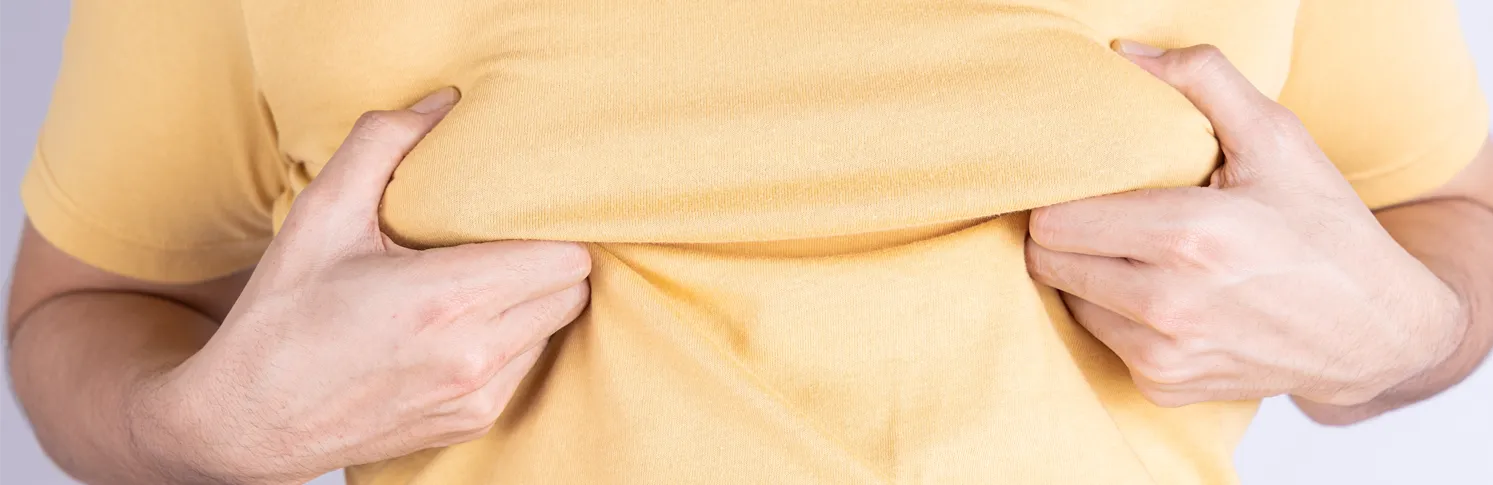

Gynaecomastia, commonly referred to as “man boobs”, is a condition that affects a significant number of men. This change can feel embarrassing and may impact self-confidence, especially when it persists despite efforts to get rid of it through hard work, diet or exercise.
This condition is very often misunderstood, with many men simply assuming it to be caused by excess fat. As a result, many men delay seeking proper advice or fixate on trying to manage it on their own, with little success. Understanding the key facts behind gynaecomastia is an important first step towards identifying the right treatment and moving forward with a solution.
What Is Gynaecomastia?
Gynaecomastia is the enlargement of male breast tissue caused by an increase in glandular tissue rather than just excess fat. It typically presents as a firm or rubbery mass beneath the nipple area and may affect one or both sides of the chest. Gynaecomastia is signified by the presence of fibrous glandular tissue.
This condition is often linked to hormonal imbalance between testosterone and oestrogen. As it can resemble other chest conditions, an accurate assessment is important to determine whether the issue is glandular, caused by fat, or a combination of both.
1. Not All “Man Boobs” Are Gynaecomastia
Not all chest enlargement in men is true gynaecomastia. While the term “man boobs” is often used loosely, there are several possible causes, including excess fat (pseudogynaecomastia), loose skin or even the appearance of imbalance due to underdeveloped chest muscles.
True gynaecomastia involves firm glandular tissue beneath the nipple, which feels different from soft fat and does not respond to exercise or weight loss. However, many men self-diagnose incorrectly, assuming all chest fullness is the same. This can lead to frustration when the condition fails to be resolved without clinical intervention.
2. Gynaecomastia Can Affect Men of All Ages
Gynaecomastia is not limited to a specific age group. It can occur at different stages of life, from puberty, to adulthood, and even the later years.
In adolescents, it is often linked to temporary hormonal fluctuations and may resolve on its own. In adults, it can develop due to hormonal changes, certain medications, lifestyle factors or underlying health conditions. In some cases, however, no clear cause is identified.
While some forms of gynaecomastia are temporary, others may persist and become a long-term concern. When the condition does not resolve over time, a medical evaluation can help determine the cause and whether treatment is appropriate.
3. Gynaecomastia Does Not Respond to Exercise or Diet
When they are faced with gynaecomastia, many men attempt to take things into their own hands, seeking to reduce these growths through weight loss and active exercise. While this may be able to lower their overall body fat and improve muscle tone, the actual glandular tissue remains unaffected.
As a result, many men notice that their chest remains enlarged or “puffy” even after achieving a lean physique. This can be frustrating, especially when consistent effort does not lead to visible improvement in the chest area.
4. Many Gynaecomastia Cases Are Idiopathic
There are multiple recognised factors that can contribute to the development of gynaecomastia. These include hormonal imbalances between testosterone and oestrogen, certain medications such as steroids or anti-androgens, and medical conditions affecting the liver, thyroid or testes. Puberty and ageing can also trigger changes in hormone levels that lead to glandular growth.
However, in many cases, gynaecomastia develops without any clear cause. Medical evaluations may not be able to find the root of the condition. This is referred to as idiopathic gynaecomastia.
Although a medical assessment is not always able to discover the cause, a consultation with a specialist can still pave the way for treatment and removal of the fibrous glandular tissue caused by this condition.
5. Surgery Targets the Root Cause of Gynaecomastia
Gynaecomastia surgery is considered to be an effective treatment because it directly removes both the fatty and glandular components of the condition. Unlike weight loss or exercise, which only reduces fat, surgery addresses the underlying fibrous glandular tissue that causes persistent chest enlargement.
Depending on the individual case, techniques may include liposuction to remove excess fat and specialised methods to excise the firm glandular tissue. In suitable patients, minimally invasive approaches can be performed through small incisions, while more advanced cases may require additional skin removal to achieve a well-contoured result.
By targeting the root cause and tailoring the approach to the patient’s anatomy, surgery can produce a flatter, more defined chest with natural-looking outcomes and low recurrence rates.
How Do I Know If I Have Gynaecomastia?
The most reliable way to determine if you have gynaecomastia is through a clinical assessment by a qualified doctor. While it may appear similar to excess chest fat, true gynaecomastia involves firm glandular tissue that is typically identified through clinical assessment.
During the assessment, the doctor will evaluate the chest to distinguish between the varying types of tissues. A doctor may also be able to evaluate whether there are underlying concerns, such as hormonal imbalances or specific types of medications that may be causing gynaecomastia.
A proper diagnosis ensures that the condition is correctly identified and that the most appropriate treatment plan can be recommended.
Taking the Next Steps to Resolve Gynaecomastia
When it comes to gynaecomastia, a one-size-fits-all approach is rarely effective. A proper medical assessment helps to clarify the nature of the condition and allows for a more targeted approach to management. Specialist evaluation may be able to guide you towards the most appropriate treatment approach, helping you achieve a resolution and restoring your confidence.
At Dr Leo Aesthetic Plastic & Reconstructive Surgery, we are committed to performing aesthetic procedures with a focus on safety, precision and personalised care. Treatment is led by Dr Leo Kah Woon, our consultant plastic & reconstructive surgeon, who takes a structured approach to surgical planning, ensuring that each procedure is tailored to the patient’s anatomy and goals.
If you are concerned about gynaecomastia, contact us today to arrange a consultation and discuss your treatment options.