


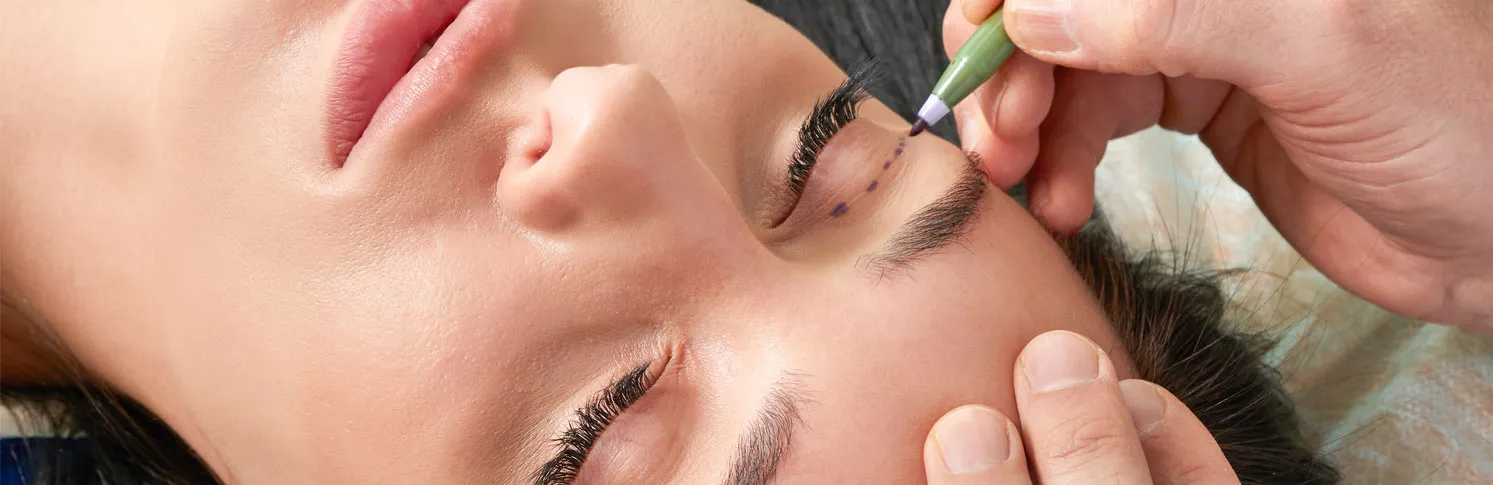

Do your eyes sometimes look tired or heavy, even after a full night’s sleep? This is a common concern and one that can affect both appearance and comfort. Changes around the eyelids often develop gradually with age, genetics or lifestyle factors, leading to sagging skin, puffiness or drooping that may make the eyes appear less alert or, in some cases, interfere with vision.
Several cosmetic eyelid surgery procedures are widely used to address these concerns and are also commonly sought by patients in Singapore. Understanding the most frequently performed eyelid surgery options helps clarify which approaches may be suitable, depending on whether the goal is aesthetic enhancement, functional improvement or a combination of both.
1. Upper Blepharoplasty
Upper blepharoplasty addresses excess skin, fat, or muscle in the upper eyelids. It’s often recommended when drooping lids start to block vision or give a permanently tired appearance. As skin loses elasticity and muscles weaken with age, a hooded look or visual obstruction can develop.
During upper blepharoplasty, small incisions are made along the natural crease of the upper eyelid. Through this incision, excess tissue is carefully removed or adjusted to restore a smoother contour while maintaining the natural eyelid fold. The incision is then closed with fine sutures that usually heal discreetly within the crease.
Swelling and mild bruising are common in the first week. Most patients can resume light activities within a few days, though full recovery and fading of incision lines can take several weeks.
2. Lower Blepharoplasty (Eyebag Surgery)
Lower blepharoplasty targets puffiness, wrinkles and loose skin beneath the eyes, commonly known as eye bags. This condition often results from ageing, genetics or fluid retention, leading to a tired or puffy look.
There are two main approaches: transconjunctival and subciliary. The transconjunctival method involves an incision inside the lower eyelid to remove or reposition fat, leaving no visible scar. The subciliary method places the incision just below the lash line, allowing the surgeon to address both excess fat and skin for a smoother, more refined look.
Bruising and swelling typically resolve within two to three weeks. Patients are advised to keep their heads elevated, use cold compresses and avoid rubbing the eyes. Some mild sensitivity or dryness may occur temporarily. This creates a smoother transition between the lower eyelid and cheek, reducing the appearance of fatigue.
3. Double Eyelid Surgery (Asian Blepharoplasty)
Many people of East Asian descent are born with single eyelids, or monolids, which lack a defined crease. If you’ve ever wished for eyes that appear more open and defined, double eyelid surgery—sometimes known as Asian blepharoplasty— can help. This procedure creates or enhances an upper eyelid crease, giving the eyes a naturally contoured and refreshed appearance.
Your surgeon will choose between the incisional or non-incisional (suture) technique based on your eyelid anatomy, skin laxity, and personal preference. The incisional method creates a permanent crease by removing excess skin or fat, while the non-incisional method forms a crease using sutures without cutting the skin, making it less invasive and allowing for a quicker recovery.
Healing times depend on the technique used. With incisional blepharoplasty, bruising can last two to three weeks, while the suture method usually heals in around ten days. To minimise swelling, keep your head elevated, apply cold compresses, and avoid makeup until your surgeon gives the all-clear.
4. Ptosis Surgery (Droopy Eyelid Correction)
Ptosis refers to the drooping of the upper eyelid due to weakened or stretched levator muscles responsible for lifting the lid. It can be present from birth or develop over time and may obstruct vision if the eyelid partially covers the pupil. Ptosis correction surgery corrects this by tightening or reattaching the levator muscle, helping to lift the eyelid, restore proper function and achieve a more alert, symmetrical appearance.
The surgical approach is customised based on the severity of your ptosis. Mild cases may be corrected internally through the conjunctiva, leaving no visible scar, while more pronounced drooping may require a small incision along the eyelid crease for precise adjustment. The procedure is usually performed under local anaesthesia with light sedation to ensure comfort throughout.
Swelling and bruising typically improve within one to two weeks. Many patients notice immediate improvement in vision, although the final results gradually settle over several months as the tissues heal and adjust.
5. Epicanthoplasty (Inner Corner Eye Surgery)
Epicanthoplasty is a surgical procedure that reshapes the inner corner of the eye by reducing the epicanthal fold—a skin fold that partially covers the inner eye area and is common among East Asian eyelids. The procedure helps create a more open, elongated and balanced eye appearance while preserving natural harmony with the rest of the facial features.
A small incision is made along the inner corner of the eye, where excess tissue is precisely removed or repositioned to reveal more of the white part of the eye (sclera). The incision is then closed with fine sutures to minimise visible scarring. Epicanthoplasty is often performed together with double eyelid surgery to enhance the overall shape, balance and definition of the eyes.
As with other eyelid procedures, mild swelling and redness are normal during the first week. Most people can resume their usual activities after about seven days, though complete healing may take several weeks. Following post-operative care instructions and avoiding prolonged sun exposure are important for achieving the best results.
Explore Your Eyelid Surgery Options With Dr Leo Kah Woon
Eyelid surgery encompasses a range of procedures, each designed to address specific concerns such as sagging skin, puffiness, drooping lids or the absence of a defined eyelid crease. From upper and lower blepharoplasty to ptosis correction, double eyelid surgery and epicanthoplasty, understanding how each option works helps clarify what can be realistically achieved. By considering your eyelid anatomy, functional needs and aesthetic preferences, it becomes easier to identify the approach that best supports a refreshed appearance and, where relevant, improved vision.
If you are considering eyelid surgery and would like personalised advice, a professional consultation is an important first step. At Dr Leo Aesthetic Plastic & Reconstructive Surgery, patients receive care that is tailored to their individual concerns and goals in a safe, supportive setting. Your consultation will be guided by Dr Leo Kah Woon, who takes a thoughtful, patient-centred approach to eyelid surgery. Book an appointment to discuss your treatment options in detail and determine a plan that aligns with your goals.