




Jaw asymmetry is a structural or functional imbalance between the left and right sides of the mandible (lower jaw) or maxilla (upper jaw) that disrupts facial midline harmony. This condition manifests as a visible deviation of the chin, an uneven jawline, or a lopsided appearance when the face is at rest or in motion. Correcting this imbalance requires a targeted clinical roadmap to identify whether the deviation is rooted in bone growth, muscle volume, or dental alignment.
Understanding the Anatomical Causes of Jaw Asymmetry
Jaw asymmetry is rarely the result of a single factor; rather, it’s typically rooted in a mechanical or structural discrepancy within the lower facial framework. Identifying whether the imbalance originates from the bone, the musculature, or the dental alignment is the critical first step in establishing a stable clinical result.
The anatomical causes of a lopsided jaw are generally categorised into three primary clinical origins:
- Skeletal Asymmetry: This condition is caused by uneven bone growth, such as hemimandibular hyperplasia, where one side of the mandible grows more rapidly or for a longer duration than the other. This skeletal deviation often leads to a tilted chin point and a significant shift in the dental midline, requiring bone realignment to achieve facial harmony.
- Muscular Asymmetry: Often the result of masseter hypertrophy, this occurs when the jaw muscles become overdeveloped on one side. This is frequently triggered by chronic bruxism or unilateral chewing habits, which create a wider appearance on one side of the lower face despite the underlying bone structure remaining symmetrical.
- Dental Malocclusion: Misaligned teeth can force the mandible to shift into a compensated resting position to allow for functional chewing. Over time, this functional shift can lead to secondary changes in the joint position and soft tissue, creating a permanent appearance of a lopsided jawline without an inherent bone deformity.
The Clinical Evaluation and Diagnostic Roadmap
The clinical evaluation of jaw asymmetry is a systematic diagnostic process used to differentiate between bone discrepancies, muscular imbalances, and joint dysfunctions. By identifying the precise anatomical source of the deviation, the surgeon can develop a targeted surgical or non-surgical roadmap that ensures long-term structural stability and facial harmony.
The diagnostic process involves three critical clinical assessment stages:
- Physical Examination and Midline Assessment: The surgeon begins by evaluating the facial midline to determine the degree of mandibular or maxillary deviation. This includes a detailed analysis of the dental arches and the occlusal plane to see how the upper and lower teeth meet, which often reveals whether the asymmetry is a functional shift or a permanent skeletal deformity.
- Advanced Imaging and Cephalometric Analysis: To map the underlying bone structure with clinical precision, 3D CT scans and cephalometric x-rays are utilised. These imaging techniques allow the surgeon to measure bone density and length on both sides of the face. This provides the necessary data to plan corrective osteotomies or bone-shaving procedures with sub-millimetre accuracy.
- Functional Assessment of the Temporomandibular Joint: A thorough mechanical evaluation of the Temporomandibular Joint (TMJ) is conducted to check for restricted movement, clicking, or pain. Since jaw asymmetry often places uneven stress on the joints, assessing the TMJ ensures that the corrective plan will not only improve aesthetics but also restore healthy mechanical function and prevent future joint degeneration.
Surgical Correction for Skeletal Jaw Asymmetry
Surgical intervention is the definitive clinical solution for jaw asymmetry rooted in uneven bone growth. By physically repositioning the mandibular or maxillary segments, the surgeon aligns the lower face with the central facial midline. This structural approach ensures a permanent correction of the skeletal framework, restoring both bilateral symmetry and a functional dental bite.
This is achieved through:
Orthognathic Surgery for Bone Realignment
The mechanical foundation for correcting a lopsided jaw involves orthognathic surgery, specifically the Le Fort I Osteotomy for the upper jaw and the Bilateral Sagittal Split Osteotomy (BSSO) for the lower jaw. These clinical techniques allow the surgeon to separate and move the jaw segments into a balanced position, ensuring the dental midline and the overall jaw structure are perfectly aligned for bilateral symmetry.
By repositioning the maxilla or mandible, this structural intervention addresses the root cause of skeletal deviation rather than merely masking the surface-level asymmetry. This approach is essential for patients whose jaw imbalance affects their functional bite or contributes to long-term joint strain, as it provides a permanent correction to the facial framework.
Mandibular Angle Reduction or Augmentation
In cases where the jaw angles are asymmetrical in width or height, a mandibular ostectomy is performed to shave down the prominent side of the bone. Conversely, if one side of the jaw is deficient, biocompatible implants or bone grafting can be used to build up the mandibular angle to match the opposing side. This dual clinical approach ensures that the lateral profile of the jaw is uniform and well-defined, providing a symmetrical transition from the ear to the chin.
Genioplasty for Chin Alignment
Jaw asymmetry is frequently accompanied by a deviated chin point that shifts away from the facial midline, disrupting the vertical harmony of the face. A sliding genioplasty allows the surgeon to horizontally or vertically reposition the chin bone, aligning it precisely with the nose and philtrum to correct the deviation. This final structural adjustment is essential for completing the symmetry of the lower third of the face, ensuring the chin provides a balanced anchor for the reconstructed jawline.
Non-Surgical and Minimally Invasive Interventions
Non-surgical interventions provide a targeted clinical solution for jaw asymmetry that originates from soft tissue discrepancies rather than skeletal bone growth. These minimally invasive techniques focus on modulating muscle volume or restoring subcutaneous fat to achieve bilateral facial harmony without the need for an osteotomy:
Botulinum Toxin for Masseter Hypertrophy
Botulinum toxin provides a targeted clinical solution for jaw asymmetry caused by masseter hypertrophy, where the masticatory muscles are overdeveloped on one side. By injecting neurotoxins directly into the overactive muscle, the surgeon can temporarily relax the tissue, leading to a visible reduction in muscle volume over several weeks. This non-surgical approach effectively narrows the wider side of the lower face, restoring a symmetrical jawline without the need for bone contouring or invasive structural changes.
Fat Grafting and Dermal Fillers
Autologous fat grafting and dermal fillers provide a clinical solution for jaw asymmetry that persists despite a symmetrical skeletal framework. These procedures address soft tissue volume deficiencies by restoring the subcutaneous layer on the flatter side of the face, effectively camouflaging minor structural gaps. While dermal fillers offer an immediate but temporary correction of the mandibular contour, fat grafting utilises the patient's own tissue to provide a more permanent and natural-looking restoration of bilateral facial harmony.
The Role of Orthodontics in Jaw Realignment
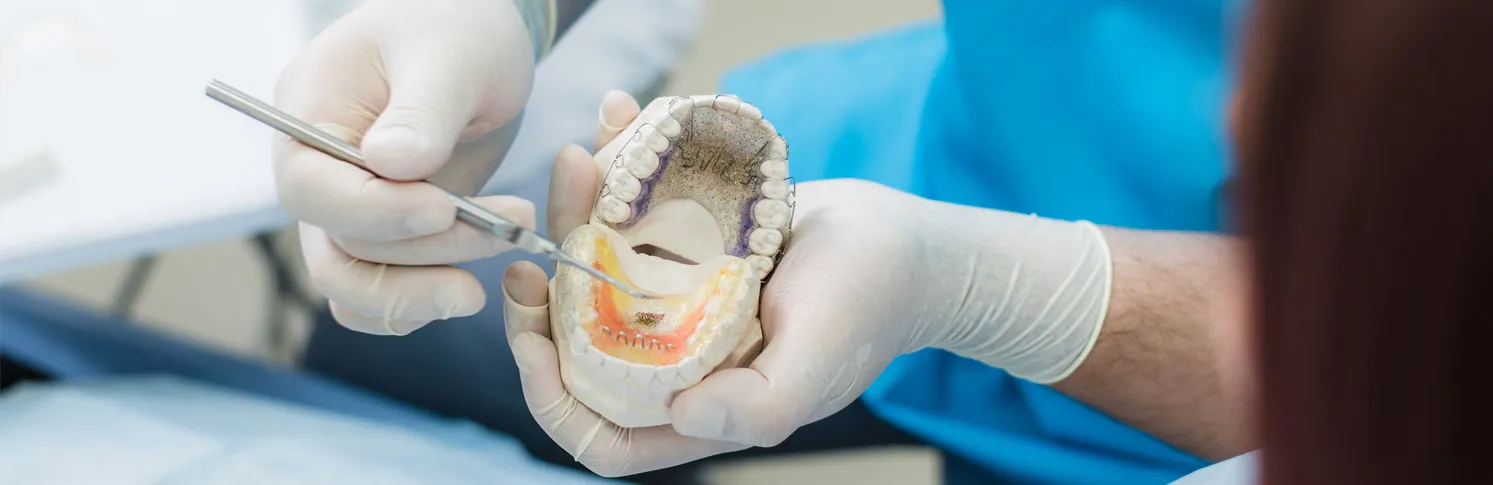
The correction of skeletal jaw asymmetry is a collaborative clinical process that integrates orthodontic treatment with surgical repositioning. Because the teeth often compensate for a misaligned jaw by tilting or shifting, orthodontics are required to move the dental arches into a neutral position before the underlying bone is surgically corrected.
This clinical coordination is divided into two primary phases to ensure structural and functional stability:
Pre-Surgical Braces
Pre-surgical orthodontics are utilised to decompensate the dental arches, moving the teeth into their ideal positions relative to their respective jaw bones. This phase is critical because it allows the plastic surgeon to move the skeletal segments into a perfectly symmetrical position during the osteotomy without being limited by a poor dental fit. By aligning the teeth beforehand, the surgeon can achieve a more significant and stable structural correction of the mandibular framework.
Post-Surgical Refinement
Following the surgical realignment of the jaw, a final phase of orthodontic refinement is necessary to settle the bite into its new permanent position. This post-operative stage ensures that the minor dental discrepancies are resolved, providing long-term structural stability and preventing the jaw from shifting back into an asymmetrical resting state. This clinical refinement is essential for maintaining both the aesthetic symmetry of the face and the mechanical health of the temporomandibular joints.
Resolving Jaw Asymmetry with Dr Leo Plastic Surgery
Correcting an asymmetrical jaw requires a sophisticated balance between structural realignment and aesthetic contouring. Whether the imbalance is rooted in skeletal growth, muscular hypertrophy, or dental malocclusion, achieving a symmetrical facial midline necessitates a clinical roadmap tailored to your specific anatomical framework.
At Dr Leo Plastic Surgery, we prioritise evidence-based care and clinical precision to ensure long-term stability and a balanced profile. Dr Leo Kah Woon leverages over 20 years of expertise in craniofacial and aesthetic surgery to guide patients through every stage of their corrective journey, from 3D diagnostic imaging to post-operative refinement.
Contact us today to schedule a comprehensive clinical evaluation and discuss a personalised treatment plan for your jaw alignment.
Frequently Asked Questions (FAQs) About Asymmetrical Jaws
Can jaw asymmetry be corrected without surgery?
Non-surgical correction is possible if the asymmetry is strictly muscular, such as masseter hypertrophy from teeth grinding. In these cases, botulinum toxin injections relax the overactive muscle to restore a symmetrical profile. However, skeletal imbalances or bone-depth discrepancies typically require surgical intervention to achieve a permanent and stable clinical alignment of the mandibular framework.
Is jaw correction surgery covered by insurance in Singapore?
Insurance coverage in Singapore generally depends on whether the procedure is classified as a functional necessity or purely cosmetic. If the jaw asymmetry causes significant medical issues, such as obstructive sleep apnoea or severe masticatory dysfunction, partial coverage may be available. Patients should obtain a formal clinical assessment and a letter of medical necessity to determine their specific policy eligibility.
Should I see a plastic surgeon or an oral surgeon for jaw symmetry?
The choice depends on whether the primary concern is the dental bite or the overall facial proportion. While an oral surgeon focuses on the alignment of the teeth and jaw bones, a plastic surgeon addresses the harmony between the bone, muscle, and skin envelope. A plastic surgeon is often preferred when the goal is to correct the external facial contour alongside the structural bone alignment.